If FedEx or UPS emailed you about registering for CARM, the steps in that email are real, and for a Canadian importer they’re most of the job. For a business located outside Canada that’s named as the importer of record, they’re only part of it. The courier’s list covers what the courier needs from you to keep clearing your shipments. It says very little about the books and records the CBSA expects you to keep, or where you’re allowed to keep them.
Canadian business with a FedEx or UPS account? The couriers’ own pages cover you. Start with FedEx’s CARM page or UPS’s CARM page.
Business located outside Canada and acting as the importer of record? Read on. Your list is longer.
What the FedEx and UPS CARM pages ask you to do
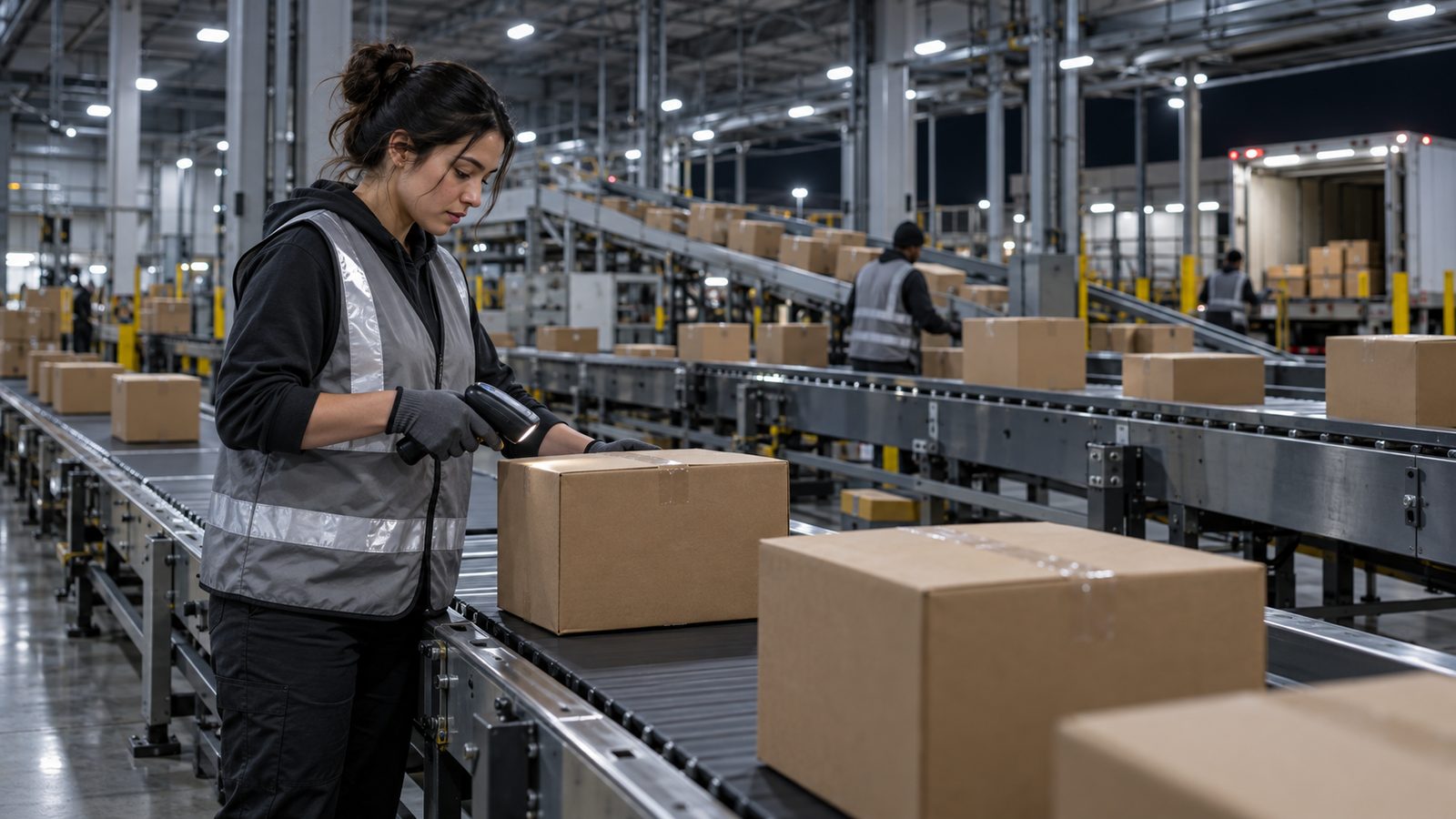
CARM is the CBSA’s Assessment and Revenue Management system. Since October 21, 2024 it’s been the system importers use to account for their goods and pay duties and taxes, and the courier emails are about keeping your shipments moving through it. Strip out the branding and FedEx’s step-by-step page and UPS’s FAQ ask for much the same things.
- A CARM Client Portal business account. FedEx says a business account manager from your own company creates and manages it. The courier doesn’t set it up for you.
- Approval of the courier’s delegation of authority. Each broker sends a request to your portal account and you accept it. Only a delegated broker can file and manage your import accounting in CARM. UPS adds that delegation doesn’t replace the Power of Attorney, which is still required.
- Your own financial security for Release Prior to Payment (RPP). Since May 20, 2025, a broker’s security no longer covers its clients. If you want goods released before duties and taxes are paid, you post your own bond or cash deposit in the portal. FedEx is blunt about it: “your business is responsible for completing this requirement; customs brokers cannot do it on your behalf.”
- The FedEx Importer Profile Hub, for FedEx Express customers. If FedEx Express is one of your designated brokers, FedEx asks you to set up a profile in its free hub so you and FedEx can track your CARM progress together.
There’s a reason these emails got more insistent this year. Until December 31, 2025, the CBSA let a broker use its own business number to release and account for commercial goods for a new non-resident importer that hadn’t finished registering. That transition measure has ended (Customs Notice 24-27), so a business that used to clear commercial goods on the courier’s number now needs its own.
The steps their CARM pages leave out for a non-resident

FedEx and UPS write for their whole customer base, and most of it is Canadian. A business outside Canada has extra steps, and some of them have to happen before anything on the courier’s list will work.
A business number first, then the import-export account. Canadian businesses can now get both through the CARM portal. Non-residents can’t. FedEx’s own CARM page says non-resident importers apply for the import-export (RM) account through the portal “but must continue to use the CRA’s BN number registration process to obtain a BN.” So it’s the CRA first, then the CBSA.
The books and records question. When you enrol in the Importer program, the portal asks whether the books and records for the program are kept in Canada. For a company with no place of business here, the honest answer is no, and that answer needs a supporting agreement called the BSF900. The rule behind it is CBSA Memorandum D17-1-21. Records have to be kept for six years following the importation of the goods, and under the CBSA’s current policy they can be kept only in Canada, the United States or Mexico. Since May 13, 2024, an importer that needs a BSF900 doesn’t get its import-export account until the BSF900 is approved.
Someone in Canada to hold the records. If your books are kept anywhere outside those three countries, you need a records location inside them, and for most overseas businesses that means an agent in Canada named on the BSF900. Even FedEx tells you this. Its information sheet for non-resident importers says: “Records must be kept in Canada, the US, or Mexico; NRIs that do not have a place of business in Canada can designate an authorized agent. A request for approval of the agent must be sent to the CBSA through the CCP using form ‘BSF900: Agreement to maintain records elsewhere than the place of business in Canada’.” That’s where the guidance stops. It doesn’t tell you who the agent should be.
GST/HST, as a separate question. Do you also need to register for GST/HST? That depends on how you sell to Canadian customers, not on the fact that you import. It’s worth settling at the same time, because GST you pay at the border on your imports is generally recoverable only if you’re registered and claim it as an input tax credit. Our guide to GST registration for non-residents covers when it applies.
Clearing your goods isn’t the same as keeping your records

Plenty of non-resident shippers assume the broker that clears their goods has the paperwork covered. It has some of it. The broker files the accounting declaration and can see the financial information tied to the shipments it cleared. The CBSA’s list in D17-1-21 is much longer: records relating to the origin, marking, purchase, importation, costs and value of the goods, payment for them, and their sale or other disposal in Canada. Your supplier invoices, proof of payment and Canadian sales records don’t live in the courier’s system.
Approving a delegation of authority doesn’t move the obligation either. Delegation lets a broker act for you in CARM. D17-1-21 says that even when the CBSA approves an agent to keep your records, the importer remains responsible for the record-keeping requirements under the Customs Act. The memo also says the CARM and eManifest portals aren’t to be used for record-keeping, so “it’s all in the portal” doesn’t satisfy anyone.
So can FedEx or UPS be the agent? Both act as customs brokers, and a licensed customs broker is one of the agents D17-1-21 lets a non-resident designate, alongside an accountant or another authorized agent. But neither company’s CARM pages offer to hold your books and records or to be named on your BSF900. If you want your courier to do it, ask them directly and get the answer in writing. If it’s no, you’ll need someone else.
Any carrier, any broker: the records arrangement stays put
The BSF900 names who keeps your records and where they’re kept. It doesn’t name who clears your goods. Those are two separate relationships in the CARM portal, and they don’t have to be the same company.
CARM lets you delegate more than one broker. FedEx’s page says importers delegate each broker separately, and UPS confirms you can have more than one. A non-resident might use FedEx Express for small parcels and a freight forwarder’s broker for pallets, then move a lane to UPS, DHL or Purolator when the rate is better. Each broker needs its own delegation and its own power of attorney. None of them changes the BSF900.
That’s the case for keeping your records agent independent of your courier. If your records sit with the company that clears your freight and you take your freight elsewhere, the arrangement holding your records is tied to a relationship you’re ending, and you’d have to move up to six years of records to a new agent and change your books and records arrangement with the CBSA. With an independent custodian, you switch carriers, delegate the new broker in the portal, and your books and records address doesn’t move. Every broker’s declarations, statements and invoices end up in the same file in Canada.
You’re never stuck with one carrier’s rates or service because they happen to hold your records.
Frequently asked questions
Is FedEx a customs broker?
Yes. FedEx acts as a customs broker in Canada through FedEx Express and FedEx Logistics. It needs a General Agency Agreement and Power of Attorney from you to act as your broker, and under CARM it also needs you to approve its delegation of authority request in your portal account.
Can FedEx or UPS keep my CBSA records?
Their CARM pages don’t offer it. A licensed customs broker can be the agent named on a BSF900 if it agrees to hold your books and records, so you can ask yours. If the answer is no, an accountant or another authorized agent in Canada can be designated instead, and that agent doesn’t need any connection to whoever clears your goods.
Does delegation of authority cover books and records?
No. Delegation lets a broker file and manage your import transactions in CARM. The record-keeping obligation stays with the importer, and keeping records somewhere other than a place of business in Canada needs a BSF900 that the CBSA approves separately.
Where can a non-resident importer keep its records?
Under current CBSA policy, in Canada, the United States or Mexico, for six years following the importation of the goods, with CBSA approval through a BSF900 if they aren’t kept at a place of business in Canada. The CARM portal itself isn’t a record-keeping location, and a head office in Europe, Asia or Australia doesn’t qualify.
Do I need a Canadian address to import into Canada?
Not a place of business. A non-resident importer can operate without one. What you do need is a business number with an import-export account, a CBSA-approved location for your books and records (in Canada, the United States or Mexico under current CBSA policy), and your own financial security if you want release before payment. If that records location is in Canada, it has to be a real address: the CBSA doesn’t accept post office boxes or mail-forwarding services.
Do I post the RPP security, or does FedEx or UPS?
You do. Since May 20, 2025, a broker’s financial security no longer covers commercial importers, and FedEx’s own guidance says brokers can’t do it on your behalf. Without your own security you aren’t eligible for release prior to payment, so duties and taxes have to be paid before the CBSA releases the goods.
Is the FedEx CARM email legitimate?
Verify it before you act on it. FedEx publishes its CARM contacts as [email protected] for FedEx Express customers and [email protected] for FedEx Logistics customers, and its Importer Profile Hub is at fedex.ca/importerprofile. Type those addresses yourself instead of following a link in the email. A real delegation request shows up inside your own CARM Client Portal account, where you can approve it after logging in directly.
Can I switch couriers without redoing my records arrangement?
Yes, as long as your records agent is independent of your carrier. You delegate the new broker in your CARM portal and sign its power of attorney. The BSF900 names who holds your records and where, not who clears your goods, so it stays as it is.
Related guides
- Non-resident importer to Canada: the complete setup guide
- Books and records kept in Canada? How to answer CBSA’s CARM question
- The BSF900 form: custodian rules and the CARM upload
- CBSA CARM Client Portal for importers: 2026 setup guide
- CBSA books and records custodian service for non-resident importers
Clearing with FedEx, UPS or anyone else? Keep the records in one place
Our CBSA books and records service for non-resident importers gives you a records address in Canada that doesn’t depend on your courier or your broker. We prepare the BSF900 and the engagement letter, you sign them and upload them in your CARM Client Portal, and we keep your import records on Canadian servers. It’s one plan at $999 USD a year, setup included. Tell us who clears your goods today and we’ll tell you what’s still missing.
Related guides
Get the tax side right the first time.
We work with e-commerce and owner-managed businesses across Canada and beyond: GST/HST and provincial sales tax, corporate structure, income splitting, and non-resident compliance. Tell us your situation and we will tell you exactly what you need.
Get in touch